
The bloating eased. The stiff morning joints quieted down. A few weeks into an all-meat plan you felt steadier than you had in years, and it seemed like proof that plants had been the problem the whole time.
Something else was happening at the same time, in a place you cannot feel. Perimenopause gut health rests on a colony of bacteria that live on one food and one food only. Remove plants and you remove their entire supply. They do not starve politely. They turn toward the next available meal, and the closest one is the slick protective layer lining your own gut wall.
That early relief was honest. What gets quietly subtracted over the months that follow is the part worth understanding before you decide how long to stay.
Ask Dr. Gala: Your Wellness Wisdom Starts Here
Can an all-meat diet really damage your gut lining during perimenopause?
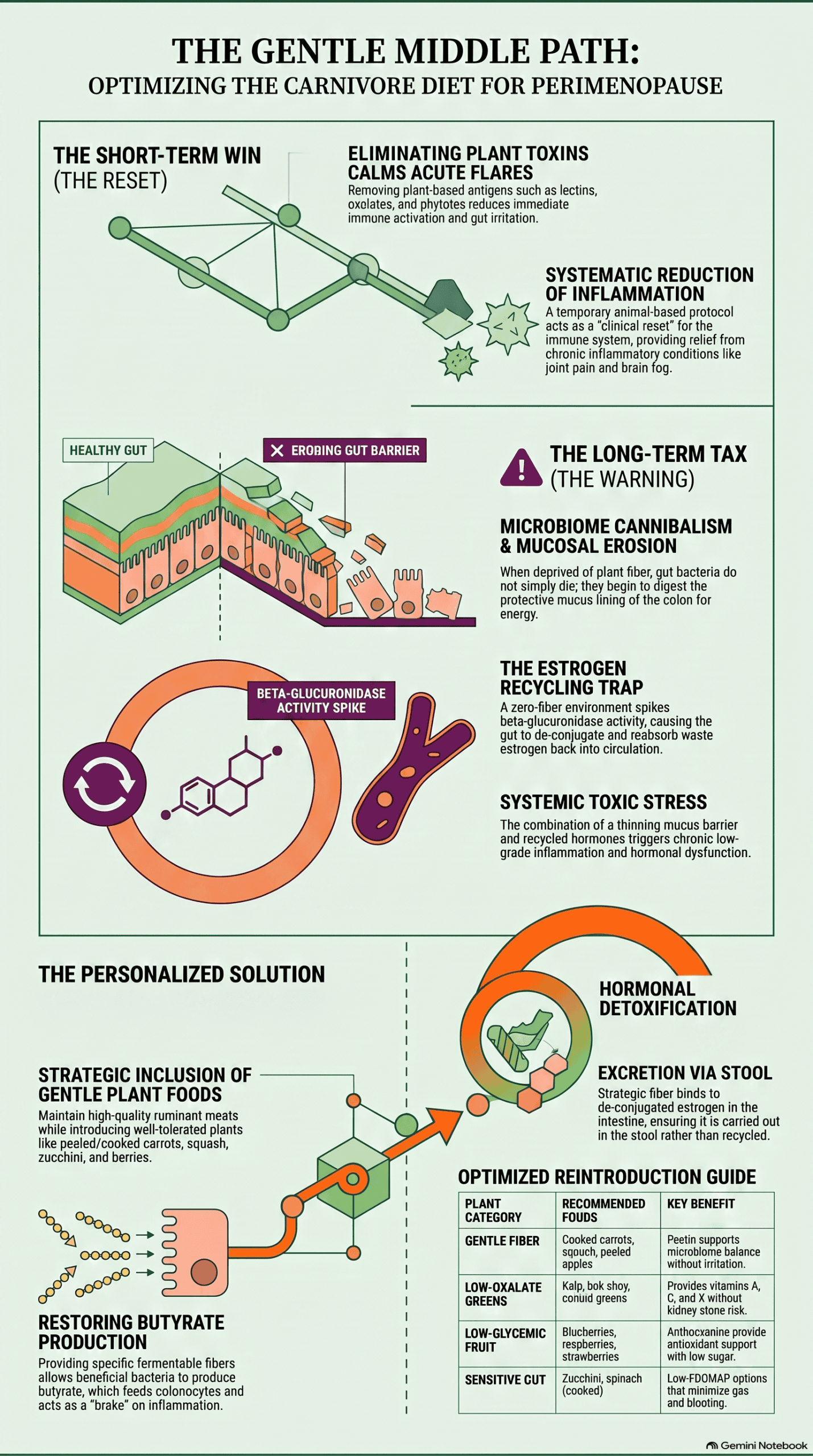
Yes, and the trade shows up later, not in the first few weeks. Fiber is the only food your beneficial gut bacteria eat, and without it they start digesting the mucus lining your gut wall instead. A controlled animal study confirmed exactly this: removing fiber led gut microbes to degrade the protective mucus layer and left the animals far more vulnerable to infection. In perimenopause, falling estrogen is already loosening that same barrier on its own, so a zero-fiber diet pulls on it from both directions at once. A 2024 modeling study in the journal Nutrients also found carnivore-style eating falls short on fiber, vitamin C, calcium and magnesium, nutrients your bones already need more of as estrogen declines.
Why Does an All-Meat Plan Feel Like Relief at First?
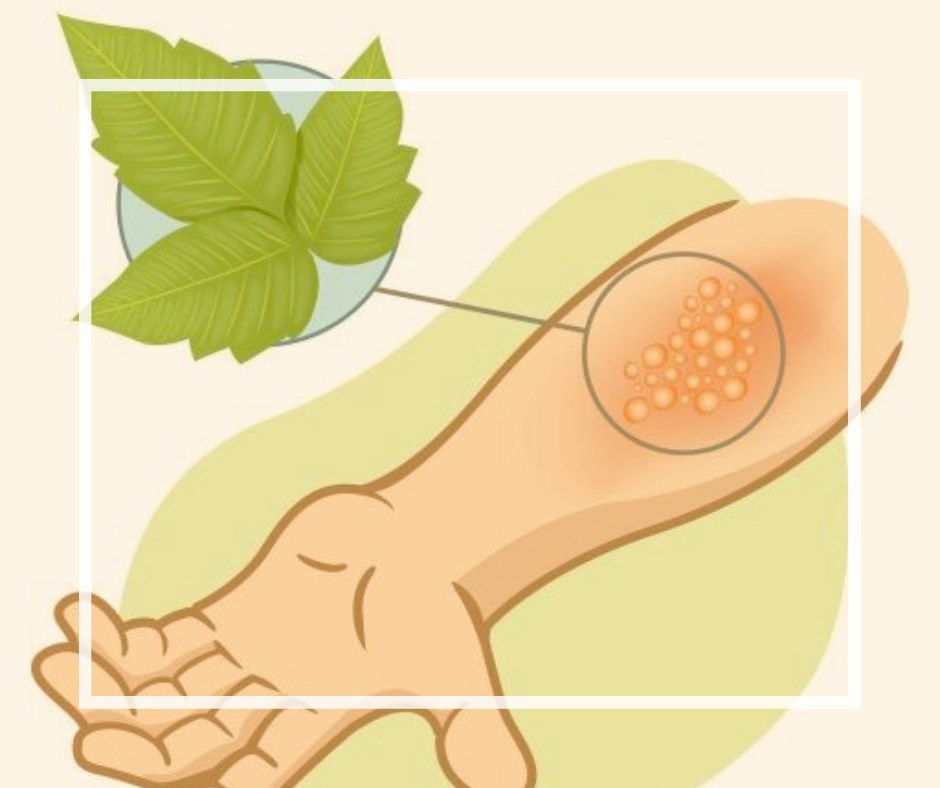
Plants carry compounds that some sensitive digestive systems handle poorly. Lectins and oxalates sit near the top of that list. Strip every plant from your plate and those irritants leave with them.
For a woman whose autoimmune condition has been flaring, that subtraction can quiet symptoms within weeks. The skin settles. The gut calms. Energy comes back. None of that is imagined, and the people reporting it are not exaggerating.
But notice what actually happened. Nothing was healed. Something was removed. An elimination diet tells you which foods your body reacts to, and it works beautifully as a short experiment. It was never meant to become a permanent address.
The trade shows up later, and it stays quiet enough that most women never trace it back to the plate.
What Is the Fiber Trade Behind Perimenopause Gut Health?
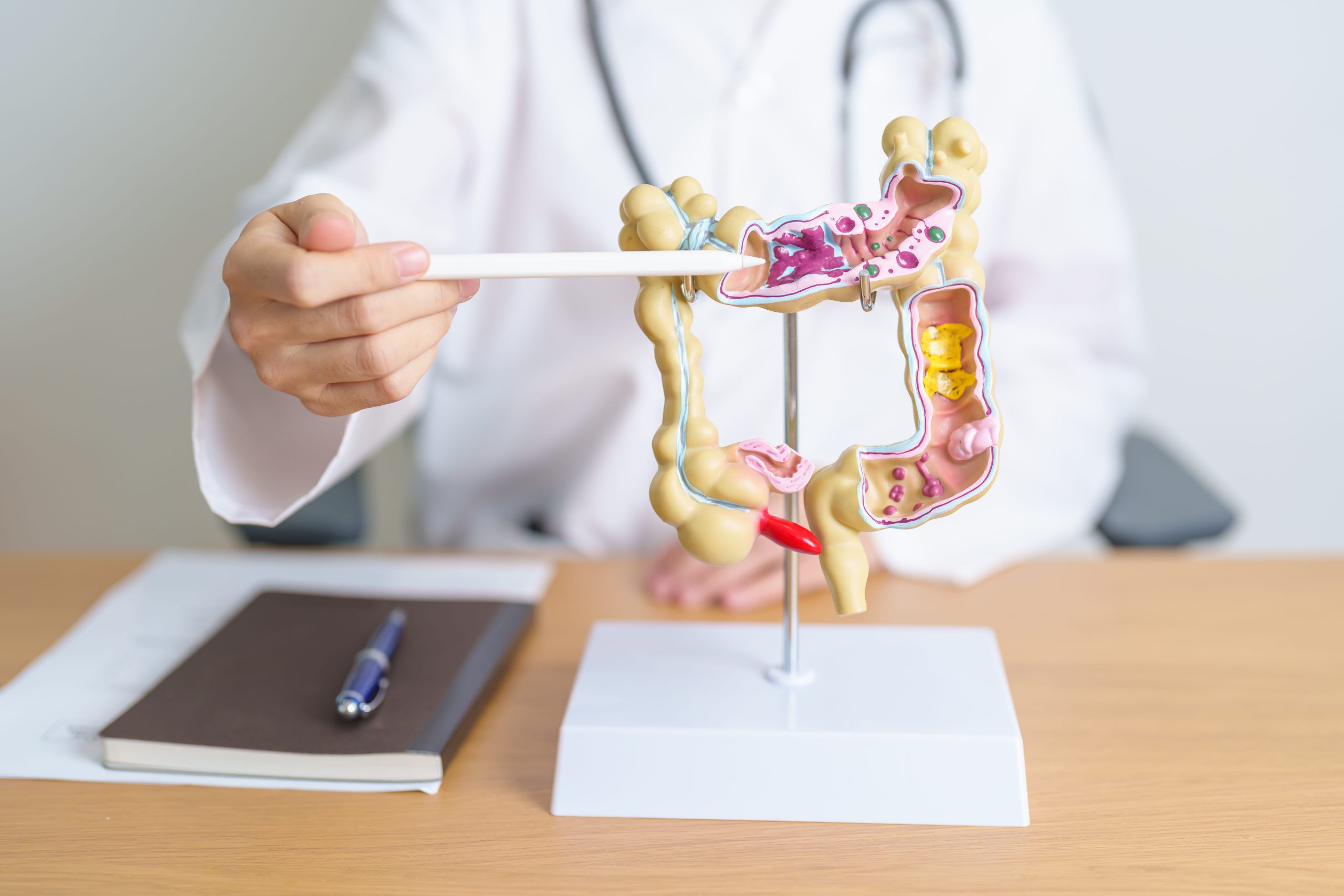
Fiber does very little for you directly. You cannot break it down, and it passes through you largely untouched. That is exactly the point. Fiber is not your food. It belongs to the bacteria living in your large intestine, and it is the only thing they eat.
Those bacteria ferment fiber into short-chain fatty acids. The one that matters most is called butyrate.
Butyrate calms inflammation along your gut wall. It feeds the cells lining your colon and keeps them replacing themselves on schedule. It also teaches your immune system to stay tolerant rather than reactive, which is the difference between a body that answers real threats and a body that attacks everything in reach.
Take fiber to zero and the whole chain goes with it. No fiber means no butyrate. No butyrate means nothing holding inflammation in check. Perimenopause gut health leans on that brake far harder than most women realize, because midlife already tilts your body toward inflammation without any help from a restrictive diet.
When Do Your Own Bacteria Start Eating the Wall?
Here is where it turns. When those bacteria run out of fiber, they do not simply die off and leave you alone. They go looking for the next available carbohydrate.
They find one. Your gut wall is coated in a layer of mucus, a slick barrier that holds bacteria at a polite distance from the tissue underneath. That mucus is built from carbohydrate. It is right there, and nothing else is.
So they start eating it.
As the layer thins, the wall behind it loses its buffer. Gaps open between cells that are meant to sit tightly together. Particles that belong inside your digestive tract begin slipping into your bloodstream, and your immune system meets them as intruders. Leaky gut symptoms begin here, long before anyone gives them a name.
Controlled animal research has watched this happen step by step. Remove fiber from the diet, and the resident microbes begin degrading the mucus layer. Those animals then proved far more vulnerable to a gut pathogen they would otherwise have handled without trouble.
Your own bacteria, working on the wall that keeps them where they belong.
What Leaky Gut Symptoms Are Tied to the Estrogen You Keep Recycling?
A thinning barrier rarely announces itself. It arrives as vague, unglamorous complaints. Bloating that comes and goes. Foggy afternoons. Skin that flares for no reason you can name. Joints that ache on days you did nothing to earn it. Easy to blame on age. Easy to blame on stress.
For women in midlife there is a second layer to this, and it runs straight through your hormones.
Your gut bacteria help regulate estrogen throughout your whole body. One specific group of them, known as the estrobolome, handles the final step of getting used estrogen out. Your liver packages that estrogen for disposal. Then an enzyme produced in your gut can unwrap the package, switching the hormone back on so it returns to your bloodstream instead of leaving in the stool.
Plant fiber keeps that enzyme in check and carries the waste out. Take the fiber away and the enzyme may swing the other direction, so you begin reabsorbing old estrogen at the precise moment perimenopause already has your levels rising and falling on their own.
Then comes the double hit. Falling estrogen loosens the tight junctions in your gut wall all by itself, as an ordinary feature of this transition. Your barrier is already softening. Layering a zero-fiber diet on top may push it past what it can hold, which is why leaky gut symptoms so often surface in midlife rather than earlier.
One honest caveat belongs here. The enzyme biology is well studied. Long-term data on women eating this way is thin, because women are difficult to study when hormones shift across every week of the month. That gap is not neutral. The group most exposed to this mechanism is the group least likely to have been measured, which leaves you running the experiment yourself.
What Carnivore Diet Side Effects Does Nobody Count?
When researchers ran the nutrient math on a strict all-meat plan, some numbers came out fine. B12, zinc and riboflavin all landed where they should.
Then came the shortfalls. Fiber, vitamin C, calcium, magnesium and thiamine.
Read that list again with midlife in mind. Calcium and magnesium sit at the center of bone density during the exact decade when bone loss speeds up. Magnesium and thiamine keep your nervous system steady when it is already carrying more than its share. These are not the carnivore diet side effects anyone posts about, because they do not show up in week three. They show up in a bone scan years later.
Vitamin C deserves its own line, because the consequence has been documented rather than predicted. On long-term zero-plant eating, vitamin C can drop low enough to produce scurvy-like signs within months. A rash. Wounds that refuse to close. Organ meats supply some, and most people are not eating them.
Yes, scurvy. In this century.
There is a heart signal as well. Research following postmenopausal women found that eating patterns high in red meat, processed meat, eggs and discretionary fats, and low in fiber-rich foods, were associated with blood markers tied to fat metabolism and hardening arteries. That work observed patterns rather than proving cause, so it is not a verdict. It is still a signal, in exactly the group reading this, pointing the same direction as everything above.
Is There a Gentler Way to Keep the Same Relief?
None of this makes meat the villain, and panic has never healed anyone.
The short-term wins are real and documented. People eating this way for a few weeks have lost weight and shown lower inflammatory markers. That happened. Pretending otherwise would insult your own experience of feeling better.
The question is what quietly leaves while you are enjoying the part that works. The carnivore diet side effects worth planning around are the slow ones, not the first-month ones.
There is a middle path, and it does more than split the difference. Remove the specific plants your body reacts to, and keep the gentle ones it tolerates without complaint. Cooked and peeled vegetables. Well-cooked squash. Berries. Foods low in the compounds that irritate you, still carrying enough fiber to keep your bacteria fed and your gut wall coated.
You keep the relief. Your microbiome keeps eating. Your estrogen keeps moving out the door instead of circling back for another pass.
That is the personalized approach, and it beats blanket exclusion every time, because it treats your body as the specific body it is rather than a category to be managed by rule.
What Does It Mean to Become Your Own Primary Care Person Here?
If you decide to try it, try it with your eyes open.
Set an end date before you start. Get bloodwork at the beginning and again a few months in. Watch vitamin C, iron, and whichever bone and heart markers your practitioner suggests. Have someone competent reading those numbers alongside you.
Most of all, treat it as an experiment rather than an identity. Diets turn permanent quietly, one week at a time, long after they have stopped giving anything back.
That is what becoming your own Primary Care Person looks like here. Informed, watching your own data, running the trial on purpose instead of adopting somebody else’s rules and hoping your body agrees.
Perimenopause gut health rests on a partnership you cannot see and cannot skip. Feed the bacteria that guard your gut wall, and they keep guarding it. Starve them long enough, and they will find something else to eat.
“If you came into my office, I’d ask you a lot of questions that would help us connect the dots … so that together we can deal with your toxic stress.
Every situation is unique and you need a plan that works for you. Not a one-size-fits-all solution.
If you’re thinking you can’t come into my office, don’t worry. I’ve created a program with all of my initial recommendations to help you unravel the mystery. You can use it at home and at your convenience.
So if you’re thinking that managing chronic stress just isn’t possible … or even the answer … for you, I want to show you what you may be missing.
And how you can identify the toxic stressors that are creating your symptoms with my Human Energy System Reboot. You can get started HERE.” – Dr. Gala