

You have been doing the work. Early morning, cardio classes, miles logged before most people are out of bed, and still, the scale will not move.
Before you sign up for another class or push harder on that treadmill, there is something your body needs you to know. Fat loss after 40 does not follow the same rules it did ten years ago. The approach that got results in your thirties is running into biology that has genuinely changed. And in many cases, the cardio you are relying on is not the solution. It is part of the problem.
That is worth sitting with for a moment.
Ask Dr. Gala: Your Wellness Wisdom Starts Here
Can your workout be the reason the scale will not move after 40?
Yes, and that is the part nobody warns you about. Every workout is a stressor. A useful one, when your body has room for it. But your nervous system has been absorbing pressure for decades, and an hour of hard cardio reads to your brain as a threat rather than exercise. Cortisol rises, your metabolism slows, and your body tightens its grip on stored fat. So fat loss after 40 stalls precisely because you pushed harder. Lift something heavy twice a week, sleep, and let the bucket drain. Your body lets go once it feels safe enough to.
When Working Harder Stops Working
Midlife changes things. Estrogen, progesterone, and testosterone start to shift. The nervous system, which has been absorbing stress for decades, becomes more sensitive and slower to recover. What the body could shake off at 32, it now holds onto.
Every workout is a stressor. A productive one, when the body has the bandwidth to handle it. But when that bandwidth is already stretched from work, poor sleep, and the general weight of daily life, adding high-intensity cardio to the pile does not help. It tips the body further into a stress state it is already struggling to exit.
This is the real story behind menopause weight gain. It is not only about hormones declining. It is about what those hormonal changes do to the way the body handles pressure. Fat storage shifts. The midsection becomes the primary holding place. And the more stressed the body stays, the tighter its grip on that stored fat becomes.
Think of it this way. Stress is a bucket. Work demands, broken sleep, emotional load, and yes, your workout, all pour into the same one. When it is already close to overflowing, more intense exercise does not create the results you are after. It tips the bucket. And a body in overflow mode does one thing above all else: it holds onto weight.
Most women respond by pushing harder. The body responds by protecting itself. It is not personal. It is biology.
The Hidden Cost of Too Much Cardio

When you get on a treadmill and push hard for an hour, your brain does not know you are exercising. It reads sustained physical effort as a threat. So it does what it always does when danger shows up: it triggers the fight or flight response and floods your system with cortisol.
It is a survival hormone doing exactly what it was built to do. It slows your metabolism, tells your body to hold onto fat, and prioritizes staying alive over burning calories. Cortisol does not always drop the moment your workout ends. In some women, especially under chronic stress, levels can remain elevated for many hours after an intense session
So you finish your run, shower, eat well, and feel like you did everything right. Meanwhile, your body is still running the emergency program well into the afternoon.
Cortisol belly fat is the physical result of that cycle playing out day after day. The body is storing fat because it genuinely believes it needs to. Chronic high-intensity cardio keeps sending that alarm signal, and the body keeps responding accordingly.
And here is what makes this particularly hard in midlife. As estrogen declines, the body becomes more sensitive to cortisol. The fight or flight response fires faster and takes longer to calm down. A workout that felt perfectly manageable at 33 may now be triggering a stress response that your body carries for half the day. The workout has not changed. Your biology has.
The Exercise That Actually Works
The one exercise that consistently supports fat loss after 40 is resistance training. Not a bootcamp. Not a high-intensity circuit. Lifting weights or working against any form of resistance that challenges your muscles.

When you build muscle, your resting metabolic rate goes up. Your body burns more fat around the clock, even while you are sitting still, reading, or sleeping. Muscle is expensive tissue. It demands fuel constantly. The more of it you carry, the harder your metabolism works without you doing a thing.
Muscle also pulls excess sugar out of the bloodstream before it gets stored as fat around the waistline. For women managing menopause weight gain, and the blood sugar shifts that come with it, this matters more than most fitness programs acknowledge.
There is more. Resistance training encourages the body to produce more estrogen and testosterone naturally. It builds bone density at exactly the time in life when protecting it becomes urgent. It supports the hormonal system rather than stressing it further.
Unlike excessive cardio, which signals danger, resistance training signals something entirely different. Build. Strengthen. Repair. That is a message the midlife body responds to well.
A Framework That Fits Real Life
Two to three days a week. Three sets of eight repetitions. That is the whole framework.
The weight should feel genuinely hard by that last rep. Not impossible. Not something you power through with bad form. Just hard enough that your body knows it has been asked to adapt.
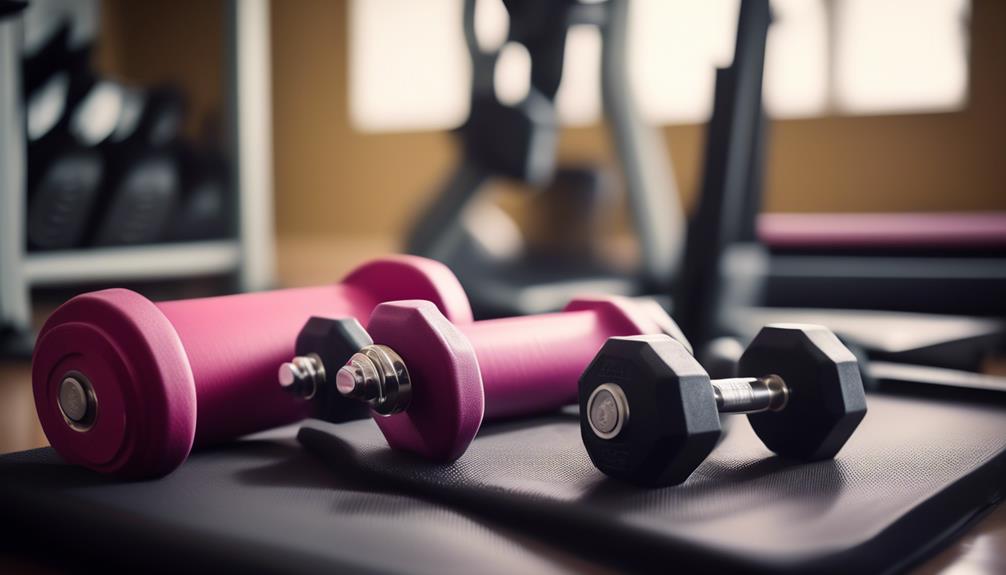
The resistance does not have to come from a gym. Dumbbells, resistance bands, body weight, and a TRX suspension system hanging from a closed door. Any of these works. The gear matters far less than the consistency.
Compound movements give the most return on time. Squats, hinges, rows, and presses work multiple muscle groups at once and build more muscle in less time than isolation exercises. For women who do not want to spend hours training, this is good news.
Progress is the key. Each week, the goal is simply to make it slightly more challenging than the week before. A little more weight. Cleaner form. Better control. The body responds to that kind of signal. Small steps, taken consistently, add up.
One Caution Before You Start

When women hear that lifting weights is the answer, the instinct is often to find the hardest version of it right away. An extreme class. A five-day program. Total exhaustion in week one, because surely that must mean faster results.
That approach will backfire.
Jumping into extreme training too quickly adds more toxic stress to a nervous system that is already on high alert. More stress means more cortisol. More cortisol means more cortisol belly fat. The cycle that was supposed to break just gets tighter.
Start where you are. If this is new to you, begin with body weight movements and focus on form. Give the body a chance to adapt before you ask it for more. Building muscle is a healing process. It responds to patience and consistency far better than it responds to punishment.
When you stop fighting your body and start working with it, something changes. The results start to follow. Not overnight. But steadily, and in a way that lasts.
Final Thought
Fat loss after 40 is not about finding a harder workout. It is about understanding what your body is actually asking for, and giving it that instead.
Your body has been responding this whole time. To the stress. To the cortisol. To the signal that too much cardio keeps sending. Change the signal, and the response changes with it.
Two to three days a week. Three sets of eight reps. That is where the shift begins.
“If you came into my office, I’d ask you a lot of questions that would help us connect the dots … so that together we can deal with your toxic stress.
Every situation is unique and you need a plan that works for you. Not a one-size-fits-all solution.
If you’re thinking you can’t come into my office, don’t worry. I’ve created a program with all of my initial recommendations to help you unravel the mystery. You can use it at home and at your convenience.
So if you’re thinking that managing chronic stress just isn’t possible … or even the answer … for you, I want to show you what you may be missing.
And how you can identify the toxic stressors that are creating your symptoms with my Human Energy System Reboot. You can get started HERE.” – Dr. Gala